
 Print
Print Word
Word PDF
PDF|
This section contains 761 words (approx. 3 pages at 300 words per page) |

|
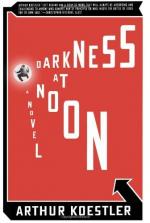
Since it is in the grip of a fixed idea, Darkness at Noon has little of the intellectual fluidity, the richness of absorbed life, the complex interplay between emotion and ideology, that distinguishes the political novel at its best. Though the subject of Koestler's book can be seen as the increasingly problematic nature of all modern politics, it seldom yields itself to the problematic as a mode of feeling or observation. Can one say that a certain kind of commitment to the problematic may itself become a form of ideological fanaticism? If so, that is how to describe Darkness at Noon. For Koestler is the sort of writer who manipulates his characters with a ruthless insistence that they conform to his will, that they illustrate prefabricated themes rather than fulfill their inner possibilities. Only intermittently does he do the novelist's job and, as one might expect, it is...
|
This section contains 761 words (approx. 3 pages at 300 words per page) |
|



