
BookRags.com Literature Guides Literature
Guides
Criticism & Essays Criticism &
Essays
Questions & Answers Questions &
Answers
Lesson Plans Lesson
Plans
My Bibliography Periodic Table U.S. Presidents Shakespeare Sonnet Shake-Up
Research Anything:        
History | Encyclopedias | Films | News | Create a Bibliography | More... Login | Register | Help

Not What You Meant?  There are 15 definitions for Inge.

Inge, William 1913–1973: Critical Essay by Georges-michel Sarotte

Print-Friendly  Order the PDF version  Order the RTF version
About 7 pages (1,998 words)
William Inge Summary

Bookmark and Share Questions on this topic? Just ask!

The similarities in characters and situations in [the work of William Inge and Tennessee Williams] are obvious: sexual fantasies, frustrated women, the devirilization of studs—"homosexual spite"—homosexual characters studied covertly etc. However, Inge's plays add to the list of ruses the homosexual dramatist has been forced to employ in depicting his own experience, particularly with regard to "virile friend-ship," the caustic description of heterosexual relationships, and the portrait of "Mom," the overprotective and castrating woman and mother. (p. 121)

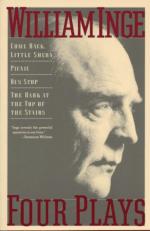
[A] careful reading of [Inge's] plays, beginning with the very first, clearly reveals that the studs [Turk in Come Back, Little Sheba, Hal Carter in Picnic, Bo in Bus Stop, and Rubin in The Dark at the Top of the Stairs] have feet of clay; Inge is methodically trying to show us that a virile appearance can conceal a lack of real masculinity. (p. 124)

This is a free excerpt of 142 words. There are 1,998 words (approx. 7 pages at 300 words per page) in the full critical essay.

Read the rest of this Criticism with our Inge, William 1913–1973: Critical Essay by Georges-michel Sarotte Access Pass.

Ask any question on William Inge and get it answered FAST!
Answer questions in BookRags Q&A and earn points toward
discounted or even FREE Study Guides and other BookRags products!
Learn more about BookRags Q&A
Copyrights
Inge, William 1913–1973: Critical Essay by Georges-michel Sarotte from Literature Criticism Series. ©2005-2006 Thomson Gale, a part of the Thomson Corporation. All rights reserved.


Join BookRagslearn moreJoin BookRags


About BookRags | Customer Service | Report an Error | Terms of Use | Privacy Policy

