
 Print
Print Word
Word PDF
PDF|
This section contains 1,151 words (approx. 4 pages at 300 words per page) |

|
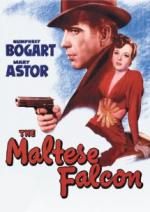
[Huston made from The Maltese Falcon] one of the classics of dark cinema, a film important not only for its fidelity, but because it bears his own distinctive signature.
The very choice of Falcon was consistent with the personality Huston would convey in nearly all his subsequent work—perhaps Falcon even determined that personality to some degree. Notice how neatly it fits into the Huston canon; most of his good films—Treasure of the Sierra Madre, Key Largo, We Were Strangers, The Asphalt Jungle, The Roots of Heaven, Beat the Devil, The Misfits, Fat City—have depended on simple visual symbolism and sharp contrasts of character. They are all quasiallegorical adventures about groups of exotic, eccentric people, and, as several commentators have observed, they usually end on a note of great, ironic failure. Even The African Queen, which isolates two completely different character types, is barely an exception...
|
This section contains 1,151 words (approx. 4 pages at 300 words per page) |
|



