
BookRags.com Literature Guides Literature
Guides
Criticism & Essays Criticism &
Essays
Questions & Answers Questions &
Answers
Lesson Plans Lesson
Plans
My Bibliography Periodic Table U.S. Presidents Shakespeare Sonnet Shake-Up
Research Anything:        
History | Encyclopedias | Films | News | Create a Bibliography | More... Login | Register | Help

Not What You Meant?  There are 14 definitions for Polk County.  Also try: Zora.

Hurston, Zora Neale 1901?–1960: Critical Essay by Philip Slomovitz

Print-Friendly  Order the PDF version  Order the RTF version
About 2 pages (573 words)
Zora Neale Hurston Summary

Bookmark and Share Questions on this topic? Just ask!

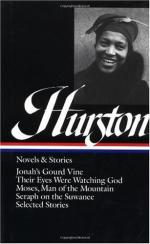
[It] is exceedingly interesting to read a new biography of the Hebrew prophet [Moses] written by an American Negro. Zora Neale Hurston has already acquired fame as a writer, and in Moses: Man of the Mountain she reveals marked ability as a student and interpreter of Negro folkways. It is a magnificent story, but it is weak in its interpretation of the ethical contributions of the prophet and in its treatment of the code of laws handed down by him. For to Jews, Moses is primarily the lawgiver, the great creator of the great code known as the Decalogue. But Miss Hurston presents Moses as a great "voo-doo man," which is the position given him by the Negro. Her distinctive contribution is her brilliant study of the problem of emancipation, done as perhaps only a Negro could do it.

In the introduction, Miss Hurston explains that the reason Moses is revered as he is by her people is because he had the power to go up the mountain to bring down the laws and because he talked with God face to face. She describes the early life of the Hebrews in Egypt, and in the course of conversations she interprets their attitudes, fears, reactions and hopes. There is a discussion, for instance, between Amram and a comrade before the birth of Moses. They speak of Pharaoh and the lack of nerve on the part of the people to deal with him. Amram's comrade says that he hates himself for not trying violence against Pharaoh even if they kill him for it. Amram replies: "That's what I hate 'em for too, making me scared to die. It's a funny thing, the less people have to live for, the less nerve they have to risk losing—nothing." Throughout this study there is alternate defiance and determination. When bolstered up by a leader like Moses, the people gain courage. When their stomachs happen to be empty, they cry for slavery.

This is a free excerpt of 325 words. There are 573 words (approx. 2 pages at 300 words per page) in the full critical essay.

Read the rest of this Criticism with our Hurston, Zora Neale 1901?–1960: Critical Essay by Philip Slomovitz Access Pass.

Ask any question on Zora Neale Hurston and get it answered FAST!
Answer questions in BookRags Q&A and earn points toward
discounted or even FREE Study Guides and other BookRags products!
Learn more about BookRags Q&A
Copyrights
Hurston, Zora Neale 1901?–1960: Critical Essay by Philip Slomovitz from Literature Criticism Series. ©2005-2006 Thomson Gale, a part of the Thomson Corporation. All rights reserved.


Join BookRagslearn moreJoin BookRags


About BookRags | Customer Service | Report an Error | Terms of Use | Privacy Policy

