
 Print
Print Word
Word PDF
PDF|
This section contains 346 words (approx. 2 pages at 300 words per page) |

|
The story of Moses has roots deep in the Hebraic imagination and Jews are proud to call it their own. Their minds have been especially busy with it in the last few years as the old narrative of persecution and injustice has repeated itself.
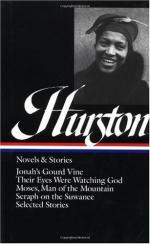
Now [in "Moses: Man of the Mountain"] Zora Neale Hurston has told the story of the law-giver from the point of view of another race, also once enslaved and persecuted, and it has lent itself so aptly that it has become a fine Negro novel. Miss Hurston has made a prose tapestry that sparkles with characteristic Negro humor though it never loses dignity. With a cunning that never lessens her integrity she has laid a new emphasis here, assumed a different motivation there, and the tale has emerged as honest and as strong as ever—and wholly alien to its racial origin. Naturally a...
|
This section contains 346 words (approx. 2 pages at 300 words per page) |
|



