
BookRags.com Literature Guides Literature Guides Criticism/Essays Criticism/Essays Biographies Biographies My Bibliography Periodic Table U.S. Presidents Shakespeare Sonnet Shake-Up
Research Anything:        
History | Encyclopedias | Films | News | Create a Bibliography | More... Login | Register | Help
Not What You Meant?  There are 9 definitions for Langston.


Hughes, (James) Langston 1902–1967: Critical Essay by Julian C. Carey

Print-Friendly  Order the PDF version  Order the RTF version
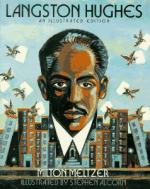
Milton Meltzer
About 1 pages (308 words)
Langston Hughes Summary

Bookmark and Share

If, as other critics suggest, [Simple, the protagonist of Hughes's The Best of Simple,] is the universal-black man in the street, the average and typical Afro-American, the cause of his (their) problems is not his lack of cultural awareness of his misdirected efforts to champion his négritude: "White folks is the cause of a lot of inconveniences in my life." White America has tried to give him a false sense of culture and to replace his black pride with a desire to be white. In both instances, Jesse B. Semple, the prototype for black Americans, has repulsed white America's efforts. (pp. 162-63)

If Langston Hughes's character has any shortcoming it is that while Simple is laughing to keep from crying, most of his readers are only laughing—laughing and failing to recognize the tragic ethos that Simple symbolizes. His efforts to acknowledge the cultural, social, and political assets of négritude are challenged by lovers, friends, states, and institutions. Nevertheless, he perseveres, he endures. He refuses to believe that Negroes are "misbred, misread, and mislead." He is not sophisticated enough to diagnose the racist psyche, but he does know that he is not the problem. Simple is not made for defeat. He is just simple, and in his simplicity and compassion and bufoonery he exposes his soul, truly hurt by a racist country; he illustrates, sometimes too humorously, the reason he is lonesome inside himself. He knows he is equal; what he wants is to be treated equal. He prays a prayer that we learn to do right, that we learn to get along together because he "ain't nothing but a man, a working man, and a colored man at that." (p. 163)

Julian C. Carey, "Jesse B. Semple Revisited and Revised," in Phylon, XXXII (copyright, 1971, by Atlanta University), Second Quarter (June), 1971, pp. 158-63.

This is a free excerpt of 303 words. There are 308 words (approx. 1 page at 300 words per page) in the full critical essay.

Read the rest of this Criticism with our Hughes, (James) Langston 1902–1967: Critical Essay by Julian C. Carey Access Pass.

 
Copyrights
Hughes, (James) Langston 1902–1967: Critical Essay by Julian C. Carey from Literature Criticism Series. ©2005-2006 Thomson Gale, a part of the Thomson Corporation. All rights reserved.

Join BookRagslearn moreJoin BookRags


About BookRags | Customer Service | Report an Error | Terms of Use | Privacy Policy

