
 Print
Print Word
Word PDF
PDF|
This section contains 518 words (approx. 2 pages at 300 words per page) |

|
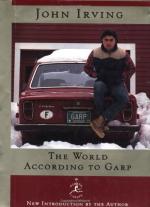
As any reader of John Irving's popular novel knows, a lot happens in "The World According to Garp"—assassinations, attempted assassinations, grotesque mutilations, grotesque self-mutilations, a dog biting a man, a man biting a dog, rape, marital infidelity…. A high percentage of these bizarre events has been preserved in George Roy Hill's ambitious attempt to bring "Garp" to the screen, but what the movie cannot do is supply the glue that binds them together—Irving's jaunty, muscular narrative presence, which goes to the mat against life's absurdities to emerge bloodied but unbowed.
A lot of people felt that "Garp" couldn't be made into a movie. A lot of people were right. Take away the prose, and one is left with a concatenation of events that seems increasingly—and distastefully—gratuitous. Even when the artist's theme is the randomness of fate, it's his challenge to make that randomness cohere...
|
This section contains 518 words (approx. 2 pages at 300 words per page) |
|



