
BookRags.com Literature Guides Literature
Guides
Criticism & Essays Criticism &
Essays
Questions & Answers Questions &
Answers
Lesson Plans Lesson
Plans
My Bibliography Periodic Table U.S. Presidents Shakespeare Sonnet Shake-Up
Research Anything:        
History | Encyclopedias | Films | News | Create a Bibliography | More... Login | Register | Help

Not What You Meant?  There are 36 definitions for Hesse.  Also try: Hermann.

Hesse, Hermann 1877–1962: Critical Essay by Thomas A. Kamla

Print-Friendly  Order the PDF version  Order the RTF version
About 1 pages (311 words)
Hermann Hesse Summary

Bookmark and Share Questions on this topic? Just ask!

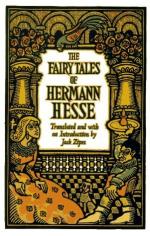
[The stories in Pictor's Metamorphoses and Other Fantasies are] generically linked to a specific narrative medium, namely the fantastic. This rubric ought not disarm the reader; for Hesse, the fantastic is not an escapist mode for solipsistic flights of the imagination. Rather, many of the themes that problematize his other works surface here just as compellingly. The conflict between life and mind in modern man's soul, the situation of the intellectual and artist in a highly restrictive and hostile environment, man's union with nature, rebellion against bourgeois philistinism—these are characteristic themes in Hesse's writings that also impact on the fantastic mode. The form he adopts in Pictor's Metamorphoses, the fairy tale and the legend, simply constitutes an extended metaphor of the way he envisions and confronts these themes.

The nineteen stories presented in this volume vary vastly in their individual plots, e.g., the artist and the objective world, religious hypocrisy, nature contra technology, the individual and the political state, psychology and dream; still, they are held together by a recurrent leitmotif, the alienation of man from his true self, a theme typical of Hesse depicting man's loss of an original state of primitive innocence through the process of civilization. By turning to the idealized realm of fairy tale and legend, Hesse is able to exercise greater aesthetic freedom in creating an ethical and spiritual goal to which man, denatured by the ravages that a disjointed reality has made on his soul, may aspire.

This is a free excerpt of 242 words. There are 311 words (approx. 1 page at 300 words per page) in the full critical essay.

Read the rest of this Criticism with our Hesse, Hermann 1877–1962: Critical Essay by Thomas A. Kamla Access Pass.

Ask any question on Hermann Hesse and get it answered FAST!
Answer questions in BookRags Q&A and earn points toward
discounted or even FREE Study Guides and other BookRags products!
Learn more about BookRags Q&A
Copyrights
Hesse, Hermann 1877–1962: Critical Essay by Thomas A. Kamla from Literature Criticism Series. ©2005-2006 Thomson Gale, a part of the Thomson Corporation. All rights reserved.


Join BookRagslearn moreJoin BookRags


About BookRags | Customer Service | Report an Error | Terms of Use | Privacy Policy

