
 Print
Print Word
Word PDF
PDF|
This section contains 376 words (approx. 2 pages at 300 words per page) |

|
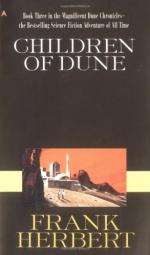
Frank Herbert's long-awaited finale of his Dune trilogy, Children of Dune, cannot be dismissed casually as just another space opera. To be sure, there is plenty of traditional science-fiction action for the true believer, but, as with the earlier novels, Dune and Dune Messiah, there's much to satisfy ecologists, anthropologists and speculative theologians, as well.
Arrakis, the desert planet, sole source in the universe of a genuine life-prolonging drug, is the real hero…. Children of Dune opens as the changes begun decades before are taking place…. The vast spectrum of characters, many of whom illustrate some Jungian mythic archetype, are either unaware of, or unconcerned with, these changes…. The consequences make up the plot of Children of Dune.
In the hands of skilled writers like Herbert, science fiction becomes a tool or a device to say something meaningful about our contemporary world. In this sense, science fiction verges...
|
This section contains 376 words (approx. 2 pages at 300 words per page) |
|



