
 Print
Print Word
Word PDF
PDF|
This section contains 401 words (approx. 2 pages at 300 words per page) |

|
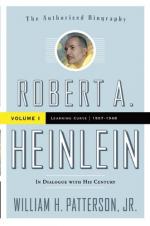
Robert Heinlein's following was ardent and instant with the appearance of his first short story in Astounding Science Fiction magazine more than 40 years ago, and it has multiplied with each of his publications. His series of "juveniles" had a great deal to do with raising that category from childish to what is now called YA—"Young adult." His influence on science fiction has been immense; his knowledge of the hard sciences and his gift for logical extrapolation inspired many beginning writers—and a good many already established hands—to knit fact and conjecture with a little more care and a great deal more literary quality than previously. The net effect over the years has been to erode the snobbery placed on science fiction. [Vladimir] Nabokov, [Doris] Lessing, [Kurt] Vonnegut, [Jorge Luis] Borges and other luminaries have found it a worthy metier with full awareness that it is, after...
|
This section contains 401 words (approx. 2 pages at 300 words per page) |
|



