
 Print
Print Word
Word PDF
PDF|
This section contains 976 words (approx. 4 pages at 300 words per page) |

|
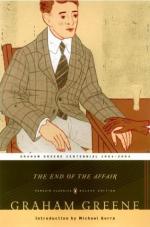
After the revolution of sorts in fiction's faith in its own adequacy to describe the world wrought by Nabokov, Robbe-Grillet, Murdoch, and Pynchon, we can appreciate [The End of the Affair, Greene's] own most deliberate gamble with the limits of art as good taste. But when it appeared in 1951, it seemed in very bad, indeed scandalous, taste. Greene had already, with The Power and the Glory (1940) and The Heart of the Matter (1948), established his reputation, for better and worse, as the most complex and challenging religious novelist of his day. But even for many of his most sympathetic readers, he took things a bit too far in this story of a contemporary Magdalene, an adulteress named Sarah Miles who utters a prayer for her lover as he is trapped by a V-2 explosion outside their bedroom, finds herself drawn more and more to Catholic mysticism, finally dies, having...
|
This section contains 976 words (approx. 4 pages at 300 words per page) |
|



