
BookRags.com Literature Guides Literature Guides Criticism/Essays Criticism/Essays Biographies Biographies My Bibliography Periodic Table U.S. Presidents Shakespeare Sonnet Shake-Up
Research Anything:        
History | Encyclopedias | Films | News | Create a Bibliography | More... Login | Register | Help
Not What You Meant?  There are 5 definitions for Lord of the Flies.  Also try: Pig.

Search "Golding, William 1911–: Critical Essay by Peter Green"

Criticism Navigation
 

Golding, William 1911–: Critical Essay by Peter Green

Print-Friendly  Order the PDF version  Order the RTF version
William Golding
About 5 pages (1,477 words)
Lord of the Flies Summary

Bookmark and Share

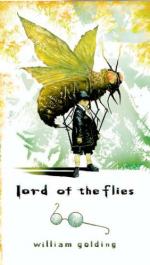
Golding is, primarily, a religious novelist: his central theme is not the relationship of man to man but the relationship of man, the individual, to the universe; and through the universe, to God.

The symbolism of his novels is, in essence, theological. Both Lord of the Flies and The Inheritors are concerned with the primal loss of innocence. Pincher Martin, as the last chapter proves, explicitly concerns the sufferings of a dead man who has created his own Purgatory. It is a moral axiom of Golding's that man, and man alone, introduced evil into the world: a view which is hardly separable from the doctrine of Original Sin. To a critic who suggested that good was equally an exclusive human concept, he replied: 'Good can look after itself. Evil is the problem.' This attitude suggests both the emotional strength of his work and the intellectual paradox underlying it. He represents himself, theologically, as what used to be loosely termed a Deist; and yet the whole moral framework of his novels is conceived in terms of traditional Christian symbolism.

This is a free excerpt of 177 words. There are 1,477 words (approx. 5 pages at 300 words per page) in the full critical essay.

Read the rest of this Criticism with our Golding, William 1911–: Critical Essay by Peter Green Access Pass.

Copyrights
Golding, William 1911–: Critical Essay by Peter Green from Literature Criticism Series. ©2005-2006 Thomson Gale, a part of the Thomson Corporation. All rights reserved.

Join BookRagslearn moreJoin BookRags


About BookRags | Customer Service | Report an Error | Terms of Use | Privacy Policy

