
BookRags.com Literature Guides Literature Guides Criticism/Essays Criticism/Essays Biographies Biographies My Bibliography Periodic Table U.S. Presidents Shakespeare Sonnet Shake-Up
Research Anything:        
History | Encyclopedias | Films | News | Create a Bibliography | More... Login | Register | Help
Not What You Meant?  There are 5 definitions for Lord of the Flies.  Also try: Pig.

Search "Golding, William 1911–: Critical Essay by James R. Baker"

Criticism Navigation
 

Golding, William 1911–: Critical Essay by James R. Baker

Print-Friendly  Order the PDF version  Order the RTF version
William Golding
About 1 pages (323 words)
Lord of the Flies Summary

Bookmark and Share

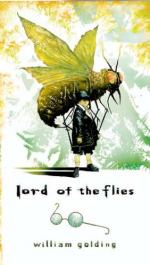
[Golding] satirizes the Christian as well as the rationalist point of view. In Lord of the Flies, for example, the much discussed last chapter offers none of the traditional comforts. A fable, by virtue of its far-reaching suggestions, touches upon a dimension that most fiction does not—the dimension of prophecy. With the appearance of the naval officer it is no longer possible to accept the evolution of the island society as an isolated failure. The events we have witnessed constitute a picture of realities which obtain in the world at large. There, too, a legendary beast has emerged from the dark wood, come from the sea, or fallen from the sky; and men have gathered for the communion of the hunt. In retrospect, the entire fable suggests a grim parallel with the prophecies of the Biblical Apocalypse. According to that vision the weary repetition of human failure is assured by the birth of new devils for each generation of men…. Each devil in turn lords over the earth for an era, and then the long nightmare of history is broken by the second coming and the divine millenium. In Lord of the Flies … we see much the same sequence, but it occurs in a highly accelerated evolution. The parallel ends, however, with the irony of Golding's climactic revelation. The childish hope of rescue perishes as the beast-man comes to the shore, for he bears in his nature the bitter promise that things will remain as they are, and as they have been since his first appearance ages and ages ago.

James R. Baker, "Introduction" (copyright © 1963 by James R. Baker; originally published under a different title in a different version in Arizona Quarterly, Vol. 19, No. 4, Winter, 1963), in Lord of the Flies: Casebook Edition by William Golding, edited by James R. Baker and Arthur P. Ziegler, Jr., G. P. Putnam's Sons, 1964, p. xxiii.

This is a free excerpt of 318 words. There are 323 words (approx. 1 page at 300 words per page) in the full critical essay.

Read the rest of this Criticism with our Golding, William 1911–: Critical Essay by James R. Baker Access Pass.

Copyrights
Golding, William 1911–: Critical Essay by James R. Baker from Literature Criticism Series. ©2005-2006 Thomson Gale, a part of the Thomson Corporation. All rights reserved.

Join BookRagslearn moreJoin BookRags


About BookRags | Customer Service | Report an Error | Terms of Use | Privacy Policy

