
 Print
Print Word
Word PDF
PDF|
This section contains 446 words (approx. 2 pages at 300 words per page) |

|
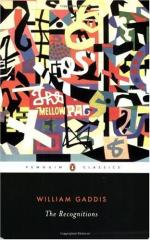
[The Recognitions] is an immensely long first novel whose spiritual forebears are Joyce's Ulysses, Eliot's The Waste Land, and Gide's The Counterfeiters. Its theme is familiar—the modern world is hell: a place where the counterfeit is preferred to the genuine and where the presiding spirits are Fakery and Delirium. Sizable sections of the novel are set in Spain, New England, and Rome, but the dominant milieu is New York's downtown Bohemia and its prosperous uptown affiliates. Mr. Gaddis's manner, as his publisher observes, brings to mind the phantasmagorical canvases of Hieronymus Bosch. There is a similar sense of pervasive damnation; a similar combination of surrealistically imagined monstrosities and meticulous concern with detail; a similar comic grotesquerie. (p. 80)
The novel's central failure is that the characters through whom the corruption of the modern world is dramatized are inadequate for the purpose. Too many of them are drawn from...
|
This section contains 446 words (approx. 2 pages at 300 words per page) |
|



