
BookRags.com Literature Guides Literature
Guides
Criticism & Essays Criticism &
Essays
Questions & Answers Questions &
Answers
Lesson Plans Lesson
Plans
My Bibliography Periodic Table U.S. Presidents Shakespeare Sonnet Shake-Up
Research Anything:        
History | Encyclopedias | Films | News | Create a Bibliography | More... Login | Register | Help

Not What You Meant?  There are 7 definitions for Tremain.

Forbes, Esther 1891–1967: Critical Essay by May Lamberton Becker

Print-Friendly  Order the PDF version  Order the RTF version
Esther Forbes
About 1 pages (165 words)
Johnny Tremain Summary

Bookmark and Share Know this topic well? Help others and get FREE products!

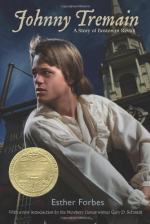
The sub-title [of "Johnny Tremain"], "a novel for old or young," will serve if you bear in mind that the young will read for Johnny's sake and the old for the sake of Esther Forbes. Here is history treated with a realism that may be an eye-opener to boys' books. The Revolution goes through the story with a rush and scramble and in its surge men and boys alike are caught up. The inside of people's minds often has as much to do with the story as the outside layer of their actions. This is adult treatment but the establishment of Johnny's relationship to the Lytes has the curve of a juvenile plot. The book's chief value is that it brings back Boston and the road to Lexington is a year when boys of sixteen had to be adult. (p. 8)

May Lamberton Becker, in New York Herald Tribune Book Review (© I.H.T. Corporation; reprinted by permission), November 21, 1943.

This is a free excerpt of 160 words. There are 165 words (approx. 1 page at 300 words per page) in the full critical essay.

Read the rest of this Criticism with our Forbes, Esther 1891–1967: Critical Essay by May Lamberton Becker Access Pass.

Ask any question on Johnny Tremain and get it answered FAST!
Answer questions in BookRags Q&A and earn points toward
discounted or even FREE Study Guides and other BookRags products!
Learn more about BookRags Q&A
Copyrights
Forbes, Esther 1891–1967: Critical Essay by May Lamberton Becker from Literature Criticism Series. ©2005-2006 Thomson Gale, a part of the Thomson Corporation. All rights reserved.

Join BookRagslearn moreJoin BookRags


About BookRags | Customer Service | Report an Error | Terms of Use | Privacy Policy

