
 Print
Print Word
Word PDF
PDF|
This section contains 1,601 words (approx. 6 pages at 300 words per page) |

|
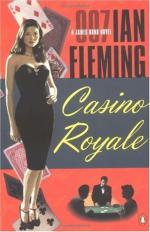
A reviewer in The Listener described Casino Royale as 'Supersonic John Buchan', and a comparison between the two authors is extremely revealing. Fleming's hero, James Bond, like Buchan's Richard Hannay, is a Secret Service agent, continually either chasing or being chased by enemy spies, often at the point of death but always saved by some improbable turn of events. Hannay's adversaries, before and during World War I, were the somewhat casual and heavy-handed emissaries of Imperial Germany: in the Bond stories, which are set against the background of the Cold War, the enemy is the far more efficient and deadly Soviet counter-espionage organization called S M E R S H (except in Diamonds are Forever, where Bond takes time off to deal with a team of American gangsters and diamond-smugglers)…. [Bond] is a thoroughgoing professional, and at the top of his class; he is one of the three...
|
This section contains 1,601 words (approx. 6 pages at 300 words per page) |
|



