
 Print
Print Word
Word PDF
PDF|
This section contains 3,625 words (approx. 13 pages at 300 words per page) |

|
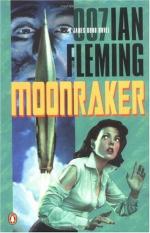
What Bond is, obviously enough, is a secret agent. He sees himself in these terms, rather self-consciously, at a climactic point in Moonraker. Bearers of this designation, which no doubt belongs more to fiction and imagination than to life, have flourished at least since the turn of the century. It's a nebulous calling, ranging from the almost completely freelance status of a Bulldog Drummond to the straight Foreign Office employment of William le Queux's Duckworth Drew, one of the earliest practitioners. This breadth of scope makes the idea more evocative, so much so that it probably focuses more daydreaming and fantasy-spinning than any other semi-mythical occupation. (p. 2)
Bond's professionalism is one of the best things about him, both as a moral quality and as a relief from that now defunct and always irritating personage, the gifted amateur who is called or just happens to wander in when MI...
|
This section contains 3,625 words (approx. 13 pages at 300 words per page) |
|



