
 Print
Print Word
Word PDF
PDF|
This section contains 8,383 words (approx. 28 pages at 300 words per page) |

|
SOURCE: "Bret Easton Ellis, Less Than Zero: Entropy in the 'MTV Novel'?" in Modes of Narrative, Königshausen & Neumann, 1990, pp. 68-87.
In the following essay, Freese contemplates the narrative qualities and social commentary of Less Than Zero.
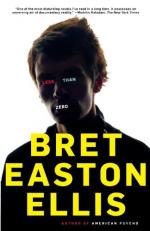
In 1985, a twenty-year-old Bennington College undergraduate named Bret Easton Ellis published a book which, as rumour has it, he had typed on his bedroom floor in about a month and which he entitled Less Than Zero. The young man, who had grown up in Sherman Oaks as the son of a well-to-do real estate analyst, wrote about what he seemed to know well from personal experience: the aimlessness and angst of rich Los Angeles youngsters in their hectic world of drugs, casual sex and violence. In a surprisingly short time his lurid tale about "the seamy underside of the preppy handbook" turned into a craze in Los Angeles and a must...
|
This section contains 8,383 words (approx. 28 pages at 300 words per page) |
|



