
 Print
Print Word
Word PDF
PDF|
This section contains 1,044 words (approx. 4 pages at 300 words per page) |

|
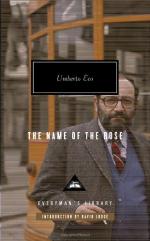
The Name of the Rose [is] a novel of murder, politics and ideas that has rightly become an acclaimed European best seller.
Late in 1327 a Franciscan, William of Baskerville, accompanied by the novice Adso of Melk, journeys to an unnamed Benedictine monastery to arrange a meeting of detente between representatives of Pope John and Emperor Louis. Just as master and disciple arrive at the abbey, a young monk commits suicide under suspicious circumstances. The worldly abbot asks the Sherlock Holmes-like Franciscan—a disillusioned inquisitor and former pupil of Roger Bacon—to investigate the shadowy affair. To this end, William is granted free run of the establishment—except for the library, the finest in all Christendom. Malachi the librarian and his assistant prohibit any direct access to the fragile illuminated manuscripts. And if a man were to try to enter the locked tower rooms? "No one," replies the abbot...
|
This section contains 1,044 words (approx. 4 pages at 300 words per page) |
|



