
 Print
Print Word
Word PDF
PDF|
This section contains 196 words (approx. 1 page at 300 words per page) |

|
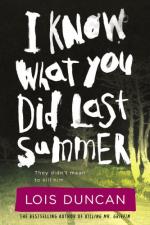
In the same mail as Julie's acceptance to Smith College comes an anonymous note with the menacing reminder: I KNOW WHAT YOU DID LAST SUMMER. Though the weight on Julie's conscience seems to have left her more apathetic than anguished, the note sends her into a frenzy because what Julie—and her former boyfriend Ray, and his friends Helen and Barry—did was no harmless frolic; in a moment of panic they left the scene of an accident in which they had killed a 10 year-old boy. Even after Barry is lured to an empty athletic field and critically wounded he refuses to release his friends from their vow of secrecy. But both he and Helen (a narcissistic TV weathergirl) are so vacuous that one hardly cares whether they get murdered or not. Still, the madman murderer is cleverly concealed among a bevy of red herrings and as he...
|
This section contains 196 words (approx. 1 page at 300 words per page) |
|



