
 Print
Print Word
Word PDF
PDF|
This section contains 453 words (approx. 2 pages at 300 words per page) |

|
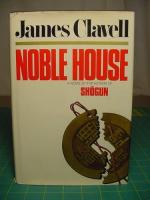
Not only is "Noble House" as long as life, it's also as rich with possibilities. For by the time you're halfway through this fourth installment in Mr. Clavell's fictional history of the Far East—the previous three entries in which were "King Rat," "Tai-Pan" and "Shogun"—there are so many irons in the fire that almost anything can plausibly happen. It may even be that Mr. Clavell himself loses track of his story. It seems to me that there's a spy or two whose fate is never resolved. And whatever happened to the threat of hepatitis that kept looming over some of the characters?
But for all its complexity of plot—and for all Mr. Clavell tries to teach us about local Hong Kong color, the Asian mind, the Chinese love of gambling, the wonders of free enterprise and the threat of the Soviet Union to the free...
|
This section contains 453 words (approx. 2 pages at 300 words per page) |
|



