
BookRags.com Literature Guides Literature Guides Criticism/Essays Criticism/Essays Biographies Biographies My Bibliography Periodic Table U.S. Presidents Shakespeare Sonnet Shake-Up
Research Anything:        
History | Encyclopedias | Films | News | Create a Bibliography | More... Login | Register | Help
Not What You Meant?  There are 6 definitions for Ramachandra.

Search "Clarke, Arthur C(harles) 1917–: Critical Essay by L. David Allen"

Criticism Navigation


Clarke, Arthur C(harles) 1917–: Critical Essay by L. David Allen

Print-Friendly  Order the PDF version  Order the RTF version
Arthur C. Clarke
About 1 pages (386 words)
Rendezvous with Rama Summary

Bookmark and Share

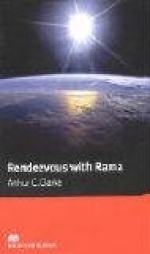
Arthur C. Clarke is one of the highest ranking writers of science fiction, and that position is deserved. Certainly 2001: A Space Odyssey is his major claim to fame with the general public. Rendezvous with Rama won, in 1975, the three highest awards given to writers of science fiction: the Hugo (from science-fiction fans), the Nebula (from science-fiction writers), and the Jupiter (from teachers of science fiction). The rest of his novels are good, solid science fiction.

Imperial Earth, his latest effort, belongs in this latter class: it is good, solid science fiction that has much interest and reads well but does not quite have the consistency and sweep of vision to overcome its flaws, to push those flaws far enough into the background so that they are virtually unnoticeable. The action occurs in 2276, during the fifth centennial celebration of the birth of the United States. Thus, one of the central threads in the novel is a projection of changes that might take place over the next three centuries. For the most part, these changes are seen through background mention rather than direct focus. This emphasis is appropriate, since this thread is secondary to that of political relationships and change, which, in turn, is closely bound to the development of Duncan Makenzie, who begins with one vision of his role and direction and ends with another. (p. 270)

This is a free excerpt of 228 words. There are 386 words (approx. 1 page at 300 words per page) in the full critical essay.

Read the rest of this Criticism with our Clarke, Arthur C(harles) 1917–: Critical Essay by L. David Allen Access Pass.

Copyrights
Clarke, Arthur C(harles) 1917–: Critical Essay by L. David Allen from Literature Criticism Series. ©2005-2006 Thomson Gale, a part of the Thomson Corporation. All rights reserved.

Join BookRagslearn moreJoin BookRags


About BookRags | Customer Service | Report an Error | Terms of Use | Privacy Policy

