
BookRags.com Literature Guides Literature Guides Criticism/Essays Criticism/Essays Biographies Biographies My Bibliography Periodic Table U.S. Presidents Shakespeare Sonnet Shake-Up
Research Anything:        
History | Encyclopedias | Films | News | Create a Bibliography | More... Login | Register | Help


Cheever, John 1912–: Critical Essay by John N. Swift

Print-Friendly  Order the PDF version  Order the RTF version
John Cheever
About 5 pages (1,360 words)
The Stories of John Cheever Summary

Bookmark and Share

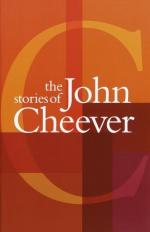
[The size of The Stories of John Cheever]—sixty-one stories, seven hundred pages—necessarily obscures the excellences of individual pieces, as their edges run together; Cheever's obsessively adulterous suburbanites and alcoholic expatriates eventually parody one another, and the complexities of their descriptions are levelled by repetition. On the other hand—and this is true of any writer's collected works—as our attention strays from the plots and characters, it fastens on the author himself, developing as an artist behind the subdued voices of his narrators…. A collection may have as clearly defined a plot as any of its constituent stories, and Cheever advises us [in his preface] that the plot of this collection is the "naked history" of his development as a writer. It is not, however, quite the dramatic formative struggle that he would have us find; the development is indeed a process of self-education, but for Cheever that process evidently involves accommodation, a slow adaptation of narrative voice to the world, to one's self, and to one's limitations. In the earliest stages of his career Cheever is already formed as a writer, and eats his peas off a fork with self-conscious precision; the developmental process of the stories is one of relaxation, of retreat from the first narrators' refusals to be publicly drunk and clumsy.

Those earliest voices are cynically tough, and they keep a safe distance from their stories; they hold the world at arm's length, practically between two fingers, and with good reason. The world of Cheever's early work is mean-spirited and corrupt, and the narrators suggest that detachment is conscience's only defense. As a result, they insist on their own emotional neutrality, and the burden of emotional response passes to the reader, to accept or reject as he sees fit…. The narrator [in "The Hartleys"] presents misplaced love and spilled blood with equal understatement; in fact, at the moment of disaster he manipulates our perspective to be sure that we recognize the glacial remoteness of his view of human tragedy…. The story ends with a general refusal of all emotional relief…. (pp. 91-2)

This is a free excerpt of 343 words. There are 1,360 words (approx. 5 pages at 300 words per page) in the full critical essay.

Read the rest of this Criticism with our Cheever, John 1912–: Critical Essay by John N. Swift Access Pass.

Copyrights
Cheever, John 1912–: Critical Essay by John N. Swift from Literature Criticism Series. ©2005-2006 Thomson Gale, a part of the Thomson Corporation. All rights reserved.

Join BookRagslearn moreJoin BookRags


About BookRags | Customer Service | Report an Error | Terms of Use | Privacy Policy

