
 Print
Print Word
Word PDF
PDF|
This section contains 887 words (approx. 3 pages at 300 words per page) |

|
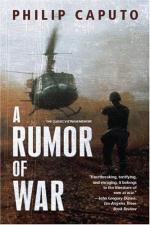
One of the indispensable features of Caputo's narrative [A Rumor of War] is that he is never less than honest, sometimes relentlessly so, about his feelings concerning the thrill of warfare and the intoxication of combat. At least in the beginning, before the madness. After sixteen months of bloody skirmishes and the ravages of disease and a hostile environment, after the psychological and emotional attrition, Caputo—who had begun "this splendid little war" in the jaunty high spirits of Prince Hal, was very close to emotional and physical collapse, a "moral casualty," convinced—and in 1966!—that the war was unwinnable and a disgrace to the flag under which he had fought to such a pitch of exhaustion.
There is a persuasive legitimacy in this hatred of a war when it is evoked by a man who has suffered its most horrible debauchments. But perhaps that is why we...
|
This section contains 887 words (approx. 3 pages at 300 words per page) |
|



