
 Print
Print Word
Word PDF
PDF|
This section contains 470 words (approx. 2 pages at 300 words per page) |

|
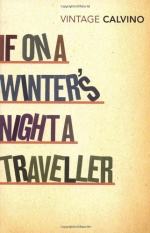
If On a Winter's Night a Traveler, Italo Calvino's version (and anti-version) of the nouveau roman, fits the conditions for "proper art" proposed by Dedalus/Joyce: "The mind is arrested and raised above desire and loathing." It is a wonderful piece of work, labyrinthine and convoluted, informed by a deadpan humor and pastiches, imitations, and parodies of an entire battery of modern and postmodern literary techniques.
It begins with an almost conventional storyteller's address to the reader: "You are about to begin reading Italo Calvino's new novel, If on a winter's night a traveler. Relax…." We immediately see that "Italo Calvino" is somebody other than the author, and as we read, discover that "you" is not the usual foil, the time-honored figure to whom the narrator tells, in the first- or third-person, his story. "You" is the second-person protagonist of the novel, and he is, above all other...
|
This section contains 470 words (approx. 2 pages at 300 words per page) |
|



