
 Print
Print Word
Word PDF
PDF|
This section contains 479 words (approx. 2 pages at 300 words per page) |

|
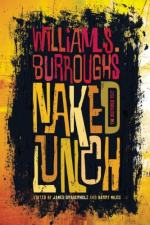
I would like to be able to say that Cities Of The Red Night is William Burroughs' most successful fiction since Naked Lunch, that it pushes beyond the kaleidoscopic kineticism of that telegraphic masterpiece to discover some terrible beauty powerful enough to shock us out of our complacency as the planet is poisoned. Although the book is full if its stunning surprises, they may shock only the uninitiated.
Burroughs has by now been transcribing his renegade vision of apocalypse and plague for over three decades. He sees the end of possibility in America as one karmic consequence of western imperialism, and takes as a symptom of our diseased state the internal cancer of bureaucratic systems. He has presented this view with a fierce and lonely intensity without making it particularly accessible. Burroughs has been the perennial innovator, and the linguistic deconditioning demanded by the Naked Lunch tetralogy, the...
|
This section contains 479 words (approx. 2 pages at 300 words per page) |
|



