
 Print
Print Word
Word PDF
PDF|
This section contains 422 words (approx. 2 pages at 300 words per page) |

|
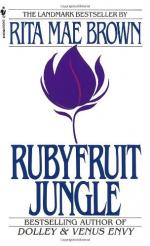
Rubyfruit is the thrice-told 20th-century tale: Sensitive member of outside group heads toward American society and lives to tell the tale. We've had it from immigrants, blacks, and women, so it's no surprise we'd find it from gays. Rubyfruit starts with early childhood and proceeds—in picaresque fashion—through adolescence, awakening sexuality (there's a very early, very funny exploration of lesbianism as well as a soon-cast-off heterosexlife), the inevitable trip to New York (where the gays are), and the equally inevitable graduation from NYU (this is, after all, a novel of education).
Being a familiar story helps—this tale is part of American myth. It also helps that Molly Bolt, the semiautobiog heroine, comes from a poor white Southern culture. Like an immigrant, black, or straight woman novelist, she is not at home in the culture of her family or the society at large. She bands with other...
|
This section contains 422 words (approx. 2 pages at 300 words per page) |
|



