
 Print
Print Word
Word PDF
PDF|
This section contains 301 words (approx. 2 pages at 300 words per page) |

|
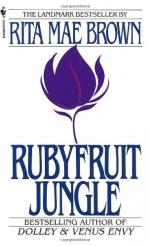
For those who think fiction is not the place to sermonize, Rubyfruit Jungle is often too blatantly preachy. Molly, the main character, has been a radical lesbian from birth, refusing all the conventional limitations of being a girl. In play she says, "I got to be the doctor because I'm the smart one and being a girl don't matter." Faced with the requirement to please others, she counters with, "I care if I like me, that's what I really care about." These assertions are the sort also to be found in the new, right-minded literature for children being published by feminist presses. There is nothing wrong with them. Nor is there anything wrong with Molly's sermonizing to a friend who feels limited by her background in what she can do with her life…. But the earnestness would weigh heavily if the book were not lifted by arrogant humor...
|
This section contains 301 words (approx. 2 pages at 300 words per page) |
|



