
 Print
Print Word
Word PDF
PDF|
This section contains 710 words (approx. 3 pages at 300 words per page) |

|
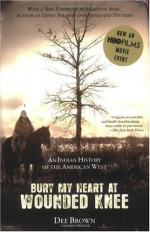
Dee Brown is known primarily for his best-selling tragic history of American Indian policy, "Bury My Heart at Wounded Knee."… Although the prose was somewhat plain, the strength and conviction of Dee Brown's view of this history brought the book alive. "Creek Mary's Blood" covers much the same material but in the novel Mr. Brown attempts to deal with a point of view other than his own…. In attempting … to cover such great spans of history and geography and provide an Indian perspective on these events, Mr. Brown overreaches his abilities as a novelist.
For one thing, Mr. Brown's prose style, though it served him well enough in "Bury My Heart at Wounded Knee," becomes inadequate, far too sketchy, for a novel that attempts to evoke what Indian people felt for the land that was being taken away from them and for a way of life that was...
|
This section contains 710 words (approx. 3 pages at 300 words per page) |
|



