
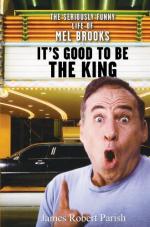
[Brooks] is the little boy, the youngest son, so beloved by his family and continually tossed in the air that his feet didn't touch the ground till he was 6 years old. He has been resting securely on the wind ever since. He knows he can always get home. He also gives an audience this dreamy assurance: They can wander in fantasy and nightmare, but with Kafka or Lenny Bruce, other Jewish masters of controlled psychosis, they were not sure of getting home from the dream. With Mel Brooks, they are merely up in the air, dandled, comfortable, blowing homeward to familiar hatreds (Germans, creeps, squares) and comfortable nostalgias (food, neighborhood, kids, old folks, Jews, Italians). The 1,000-watt kid is finally shedding his light for Southern drive-ins, Western small towns, the suburbs and exurbs and nonurbs filled with chuckling customers who never saw the originals which spawned him. In stagflation time, something that allows laughter is worth any price, especially since the price will probably go up.
Benevolent rivals for kingship in this domain of comfortable and consoling comedy are Woody Allen and Mel Brooks. They share several qualities—unthreatening physical presence, a bewildered yet focused eye, a language which slips out of the loose grasp of immigrant speech into desperate precision. Survival is never certain for them, and yet their perturbation is somehow comfortable. The audience is implicated, but not bound. Both Allen and Brooks violate rules, but not law: or perhaps it is law but not rules—they go far, but not too far. Fred Allen and Jack Benny filled some of these needs in another time. Isolation, anomie, frustration, love-lost and lovelorn fate, the common comic themes are stroked. Woody Allen and Mel Brooks are good at it. They do not threaten total revolution, but they play with nihilism. They are wanters—of love and comfort—like the audience. They also want distraction, and they give it, and they get good rewards from an audience in need. There is room for both Woody Allen and Mel Brooks at the top. (pp. 28, 30)
This is a free excerpt of 341 words. There are 677 words (approx.
2 pages at 300 words per page) in the full critical essay.
Read the rest of this Criticism with our Brooks, Mel 1926–: Critical Essay by Herbert Gold Access Pass.

