
 Print
Print Word
Word PDF
PDF|
This section contains 750 words (approx. 3 pages at 300 words per page) |

|
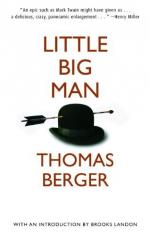
It is satire and incongruity which strike the reader about [Little Big Man] especially because both are so seldom used as important style devices in western writing. Berger has Jack Crabb tell (into a tape recorder when he is over 100) what happened to him from 1852 to 1876. (p. 286)
[The] picaresque pattern of the first half of the novel, is sometimes too involved and too fragmentary…. [Crabb] is a bounder, gold miner, gambler, gun-slinger, speculator, sharper, laborer, teamster, buffalo hunter, and finally an unwanted scout for General Custer in the Little Big Horn campaign. This entirely "Western," lawless, reckless, and shiftless career is climaxed when Crabb is the only true survivor of the Battle of the Little Big Horn…. (p. 287)
But Jack Crabb does much more than merely tear around the West. One of the astonishing qualities of Little Big Man is that what happens is much less important than...
|
This section contains 750 words (approx. 3 pages at 300 words per page) |
|



