
 Print
Print Word
Word PDF
PDF|
This section contains 1,990 words (approx. 7 pages at 300 words per page) |

|
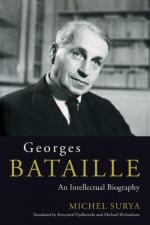
Georges Bataille is undoubtedly one of the most elusive figures of French intellectual life to attain legendary status in this century. Variously termed a surrealist, an existentialist, a Hegelian, a Marxist, or a Nietzschean, Bataille is often first identified as the author of erotic novels. Having equated literature with evil, the librarian-philosopher thus earned the title écrivain maudit, and the implied filiations with Sade and Lautréamont are intended to contain his excesses within a literary cliché. But to pigeonhole the unwieldy diversity of this work into traditional classifications perpetrates an ideological bias by clouding the moral imperative that motivated Bataille. (p. 1)
Although known among intellectuals during the 1950s, Bataille's work attracted a more general public during the following decade due to its increased availability. On ideological grounds, the contributors to the review Tel Quel established the conditions for this greater receptivity. Individually and collectively, they featured him...
|
This section contains 1,990 words (approx. 7 pages at 300 words per page) |
|



