
[The] obstinate triviality of life increasingly impinges on the literary consciousness…. The modernist sensibility, haunted by a vision of pervasive grayness and (as in Howards End) of a creeping red rust, finds ultimate expression in one of Forster's comments in A Passage to India: "Most of life is so dull that there is nothing to be said about it … and a perfectly adjusted organism would be silent." But for all its flat and bitter finality, the remark heralds not silence but a dramatic exploration of metaphysical extremes …; and if Forster fails in his quest for a redeeming order, it is not because of complacence or a willingness to accede to the dailiness of life. Barthelme's ["Critique de la Vie Quotidienne,"] on the other hand …, accommodates itself more easily to the banal horrors of la vie quotidienne. Not that the story is without incident (there is, notably, the moment when the narrator's former wife tries to "ventilate" him with a horse pistol …, but if it is true, as Philip Stevick notes in his introduction to Anti-Story, that "to allow the middle range of experience to co-exist, in a single work, with the extremities of contemporary experience is to do strange things to that ordinariness, to deny it its solidity," it is equally the case that that coexistence may, as it does in Barthelme's fiction, serve to render extremity more ordinary—to deny it, and not the middle range of experience, a solidity of specification and response.
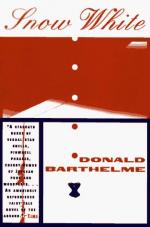
In any case, the "Critique," though it manages, characteristically, to combine the hilarious and the dismal, provides a rather too facile treatment of its subject, and its value is more representative than particular, supplying as it does a pattern for more successful examples (the Edward and Pia stories of Unspeakable Practices, among others) of Barthelme's relentless investigation of the humdrum. Of these, the best is probably the title story of City Life. More eccentric in incident and development, it expresses in a number of ways Barthelme's relation to la vie quotidienne. Speculating in the final section of the tale on "the most exquisite mysterious muck," which is the city she lives in and "which is itself the creation of that muck of mucks, human consciousness" …, Ramona goes on to contemplate the possible explanation of the virgin birth of her child: "Upon me, their glance has fallen," she thinks, reflecting on various of the men in her life. "The engendering force was, perhaps, the fused glance of all of them. From the millions of units crawling about on the surface of the city, their wavering desirous eye selected me…. I accepted. What was the alternative?" (… my italics). Ramona's last words sum up, mutatis mutandis, that is, allowing for a different level of awareness and for the artist's privileged sense of control, Barthelme's attitude as well. Implicated in the world he describes, Barthelme accepts—at least in this group of stories—not only the material that world offers him but the ironically suspensive mood resignation entails. How else to react to "brain damage," when, as the narrator of the story by that name admits: "I could describe it better if I weren't afflicted with it …" …? Or, as Dan announces, in a much quoted passage from Snow White, apropos of the linguistic "trash phenomenon": "I hazard that we may very well soon reach a point where it's 100 percent. Now at such a point, you will agree, the question turns from a question of disposing of this 'trash' to a question of appreciating its qualities, because, after all, it's 100 percent, right?" (pp. 48-9)
This is a free excerpt of 600 words. There are 3,764 words (approx.
13 pages at 300 words per page) in the full critical essay.
Read the rest of this Criticism with our Barthelme, Donald 1931–: Critical Essay by Alan Wilde Access Pass.

