
BookRags.com Literature Guides Literature
Guides
Criticism & Essays Criticism &
Essays
Questions & Answers Questions &
Answers
Lesson Plans Lesson
Plans
My Bibliography Periodic Table U.S. Presidents Shakespeare Sonnet Shake-Up
Research Anything:        
History | Encyclopedias | Films | News | Create a Bibliography | More... Login | Register | Help

Search "Barth, John 1930–: Critical Essay by Beverly Gross"

Criticism Navigation
 
Not What You Meant?  There are 15 definitions for Barth.

Barth, John 1930–: Critical Essay by Beverly Gross

Print-Friendly  Order the PDF version  Order the RTF version
About 7 pages (2,147 words)
John Barth Summary

Bookmark and Share Questions on this topic? Just ask!

It is striking … to see how much Barth's fiction has been moving toward the fulfillment of an idea—the idea being the repudiation of narrative art…. That is the paradox of Barth's novels: they are about paralysis, they seem even to affirm paralysis, yet they have more narrative energy than they know what to do with. (pp. 95-6)

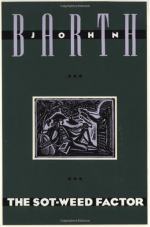
Each [of Barth's four first novels] is generally longer, wilder, more ambitious, more outrageous than its predecessor, and at the core of each is a greater nihilism…. Nihilism is merely a quirk of character in The Floating Opera and End of the Road; it is not much more than a setting for comedy, a device for irony. But nihilism is what The Sot-Weed Factor and Giles Goat-Boy come to. It is the moral, meaning, and upshot of experience in these novels, and it is embedded in their very form. The Sot-Weed Factor, disguised as an eighteenth-century novel, is really a radical definition of the novel of the twentieth century. Giles Goat-Boy, disguised as cosmic allegory, keeps undercutting its own allegorical premises by denying the possibility of meaning, identity, and answers in a world in which these things are always shifting, masked, and unattainable. The deeper nihilism of [these] … novels comes from their proclaiming not so much the impossibility of life but the impossibility of narrative.

This is a free excerpt of 223 words. There are 2,147 words (approx. 7 pages at 300 words per page) in the full critical essay.

Read the rest of this Criticism with our Barth, John 1930–: Critical Essay by Beverly Gross Access Pass.

Ask any question on John Barth and get it answered FAST!
Answer questions in BookRags Q&A and earn points toward
discounted or even FREE Study Guides and other BookRags products!
Learn more about BookRags Q&A
Copyrights
Barth, John 1930–: Critical Essay by Beverly Gross from Literature Criticism Series. ©2005-2006 Thomson Gale, a part of the Thomson Corporation. All rights reserved.


Join BookRagslearn moreJoin BookRags


About BookRags | Customer Service | Report an Error | Terms of Use | Privacy Policy

