
 Print
Print Word
Word PDF
PDF|
This section contains 529 words (approx. 2 pages at 300 words per page) |

|
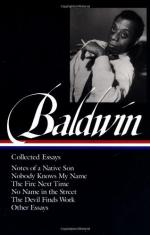
Notes of a Native Son remains, in my opinion, Mr. Baldwin's best book, either in fiction or non-fiction: it is more complex and more forceful than any of the others, more inward with the experience it seeks to describe and at the same time more detached from it. (p. 497)
We hear too often in these essays the voice of his will rather than the voice of his sensibility; there are too many examples of rhetoric, of exhortation, of uplift, of reproach, in the book, and they undoubtedly weaken the impact it makes. But the moral to be drawn from these faults is not at all that writers should eschew the political struggles into which their own deepest inclinations draw them. Anyone who might be inclined to draw that moral should try to imagine what the consequences to his work would have been if Mr. Baldwin, feeling as he...
|
This section contains 529 words (approx. 2 pages at 300 words per page) |
|



