
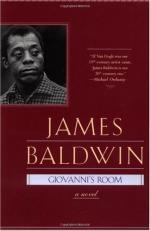
As a writer Baldwin is as obsessed by sex and family as Strindberg was, but instead of using situations for their dramatic value, Baldwin likes to pile up all possible emotional conflicts as assertions. But for the same reason that in Giovanni's Room Baldwin made everybody white just to show that he could, and in Tell Me How Long the Train's Been Gone transferred the son-father quarrel to a quarrel with a brother, so one feels about Another Country that Baldwin writes fiction in order to use up his private difficulties; even his fiction piles up the atmosphere of raw emotion that is his literary standby. Why does so powerful a writer as Baldwin make himself look simpleminded by merely asserting an inconsequential succession of emotions? (p. 222)
[In] Notes of a Native Son, Nobody Knows My Name, The Fire Next Time, Baldwin dropped the complicated code for love difficulties he uses in his novels and simplified himself into an "angry Black" very powerfully indeed—and this just before Black nationalists were to turn on writers like him. The character who calls himself "James Baldwin" in his nonfiction novel is more professionally enraged, more doubtfully an evangelist for his people, than the actual James Baldwin, a very literary mind indeed. But there is in Notes of a Native Son a genius for bringing many symbols together, an instinctive association with the 1943 Harlem riot, the streets of smashed plate glass, that stems from the all too understandable fascination of the Negro with the public sources of his fate. The emphasis is on heat, fire, anger, the sense of being hemmed in and suffocated; the words are tensed into images that lacerate and burn. Reading Baldwin's essays, we are suddenly past the discordancy that has plagued his fiction—a literal problem of conflict, for Baldwin's fiction shows him trying to transpose facts into fiction without sacrificing the emotional capital that has been his life. (pp. 223-24)
Alfred Kazin, in his Bright Book of Life: American Novelists & Storytellers from Hemingway to Mailer (copyright © 1971, 1973 by Alfred Kazin; reprinted by permission of Little, Brown and Co. in association with The Atlantic Monthly Press), Atlantic-Little, Brown, 1973.
This is a free excerpt of 363 words. There are 367 words (approx.
1 page at 300 words per page) in the full critical essay.
Read the rest of this Criticism with our Baldwin, James 1924–: Critical Essay by Alfred Kazin Access Pass.

