
 Print
Print Word
Word PDF
PDF|
This section contains 254 words (approx. 1 page at 300 words per page) |

|
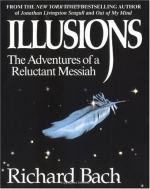
As serious religion, "Illusions" does not even begin to be anything more than [fantasy literature]. The twin problems of purpose and evil with which religion has traditionally wrestled are not even addressed, but dismissed as illusory. If religion is the modest dogma that God is not mad, then "Illusions" is an irreligious book, because it suggests that it doesn't matter whether He is or not. Nor do the simple ethical imperatives of Shimoda do justice to humankind's agonizing over the implications of its world views of moral behavior. Shimoda and Bach dismiss ethical ambiguities as easily as they dispose of existential anxieties.
It is hardly fair, I suppose, to apply such serious paradigms to a playful exercise of the fantastic imagination; still, one has the impression that Bach wants the book to be taken very seriously indeed. It is fantasy, all right, but fantasy with implications for action...
|
This section contains 254 words (approx. 1 page at 300 words per page) |
|



