
 Print
Print Word
Word PDF
PDF|
This section contains 373 words (approx. 2 pages at 300 words per page) |

|
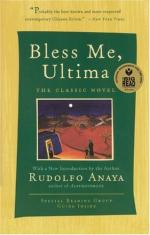
In Bless Me, Ultima, Anaya tells a good story, one concerning a boy's passage from childlike innocence to a deeper, brooding awareness of the death and life around him. Aside from the boy, the other central figure of the novel is Ultima—an aging, compassionate, ultimately mysterious, folkhealer who works her magic among a scattered group of New Mexico rural dwellers. As a sensitively drawn character, she can be compared favorably to Castañeda's Don Juan, the current favorite wiseman whose blessings are ancient, indigenous skills and knowledge. In fact, in some ways we are pulled closer to Ultima—or the solitary Indian visionary in Leslie Silko's novel, Ceremony. This is probably because our sympathies with the young central character, through whom we see such old practitioners of the ancient touch, are deeper, more natural than the sympathy we may hold for Don Juan's eager student.
The same...
|
This section contains 373 words (approx. 2 pages at 300 words per page) |
|



