
 Print
Print Word
Word PDF
PDF|
This section contains 786 words (approx. 3 pages at 300 words per page) |

|
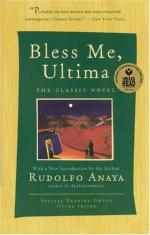
Bless Me, Ultima deserves to be described outside of the implicit claims that it is The Chicano Novel, a category as fishy and as detrimental to any clear thinking about our expectations for fiction as The American Novel category has become. Among other things, the millions of chicanos in the U.S. may feel a unity of ancestry and a community in their oppression, but their experience of life is in no other way unified…. The people of the book themselves, small-scale farmers and cowboys, some possessing more than three centuries of history with their removed corner of the world, would not recognize themselves as "chicanos" at all. "Hispano" is what they were first called; "Mexican" is the name most of them call themselves to this day. (pp. 190-91)
The place of Bless Me, Ultima is a vast place, and spectacular (which my dictionary coolly defines as "exciting...
|
This section contains 786 words (approx. 3 pages at 300 words per page) |
|



