
 Print
Print Word
Word PDF
PDF|
This section contains 514 words (approx. 2 pages at 300 words per page) |

|
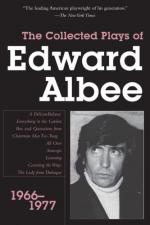
Whenever I review a play by Edward Albee, I worry about the distribution of his royalties. He has such a perfect gift for theatrical mimicry that I begin to imagine August Strindberg, Eugene O'Neill, and T. S. Eliot rising from their graves to demand for their estates a proper share of Who's Afraid of Virginia Woolf, Tiny Alice, and A Delicate Balance. Even living authors like Samuel Beckett, Eugene Ionesco, and Harold Pinter might be contemplating a case against Albee, not so much for expropriating their plots and characters as for borrowing their styles. In his latest play, The Lady From Dubuque,… the playwright has gone to an unusual source—namely himself. I can see a lawsuit coming—Albee v. Albee—where the younger accuses the older writer of plagiarism, perhaps even alienation of affection and breach of promise.
Albee certainly has breached his promise in his last...
|
This section contains 514 words (approx. 2 pages at 300 words per page) |
|



