
 Print
Print Word
Word PDF
PDF|
This section contains 2,025 words (approx. 7 pages at 300 words per page) |

|
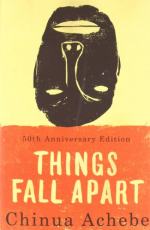
Chinua Achebe's powerful feeling for a lost civilization has really nothing to do with that other West African turning back to tradition—that is, the NEGRITUDE of the French-language writers. It is not reversion: it is not a desire to return. It is a contemporary writer's examination of the past, made so that he may better understand himself in the present…. As has been oft-noted, the title of Achebe's first and finest novel, Things Fall Apart … is significantly from Yeats, and is clearly indicative of the novelist's concern with the coherence of a former life….
What is perhaps most striking about Achebe in Things Fall Apart is that he does not neglect the ugliness, the iron brutality of habitual modes of life. Writing with admirable detachment, he creates in the central character, Okonkwo, a great literary figure of the last half of the nineteenth century—a powerful and...
|
This section contains 2,025 words (approx. 7 pages at 300 words per page) |
|



