
 Print
Print Word
Word PDF
PDF|
This section contains 1,196 words (approx. 4 pages at 300 words per page) |

|
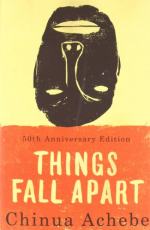
[Christmas in Biafra], Chinua Achebe's first book of poetry, may turn out to be, like Things Fall Apart, a landmark in African writing…. Written during the long period of his silence as a novelist, the poems are a chronicle of the difficult years of a man and his nation, as well as a truly unified book of poetry which has much to offer for both African and Western readers. Divided into 5 sections, the book takes us on a journey which begins with dark omens of disaster, progresses into the nightmare of a fratricidal war, passes through the difficult transition period when both the writer's own voice and the nation of Nigeria were being reborn, and finally rises to the point where the poet has returned, full-blown, to both his power and his duty as a writer.
The book begins with a short poem, "1966."… The poem is rich in...
|
This section contains 1,196 words (approx. 4 pages at 300 words per page) |
|



