
BookRags.com Literature Guides Literature
Guides
Criticism & Essays Criticism &
Essays
Questions & Answers Questions &
Answers
Lesson Plans Lesson
Plans
My Bibliography Periodic Table U.S. Presidents Shakespeare Sonnet Shake-Up
Research Anything:        
History | Encyclopedias | Films | News | Create a Bibliography | More... Login | Register | Help

Not What You Meant?  There are 7 definitions for Things Fall Apart.

Achebe, Chinua 1930–: Critical Essay by Arthur Ravenscroft

Print-Friendly  Order the PDF version  Order the RTF version
Chinua Achebe
About 2 pages (558 words)
Things Fall Apart Summary

Bookmark and Share Questions on this topic? Just ask!

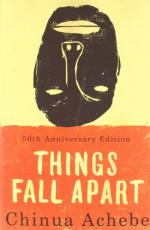
[Things Fall Apart] is a short and extraordinarily close-knit novel which in fictional terms creates the way of life of an Ibo village community when white missionaries and officials were first penetrating Eastern Nigeria. The highly selective details with which Achebe represents the seasonal festivals and ceremonies, the religion, social customs, and political structure of an Ibo village create the vivid impression of a complex, self-sufficient culture seemingly able to deal in traditional ways with any challenge that nature and human experience might fling at it…. [The] greatest strength of Things Fall Apart is the tragic 'objectivity' with which Achebe handles a dual theme.

There are two main, closely intertwined tragedies—the personal tragedy of Okonkwo, 'one of the greatest men in Umuofia', and the public tragedy of the eclipse of one culture by another. (pp. 8-9)

This is a free excerpt of 135 words. There are 558 words (approx. 2 pages at 300 words per page) in the full critical essay.

Read the rest of this Criticism with our Achebe, Chinua 1930–: Critical Essay by Arthur Ravenscroft Access Pass.

Ask any question on Things Fall Apart and get it answered FAST!
Answer questions in BookRags Q&A and earn points toward
discounted or even FREE Study Guides and other BookRags products!
Learn more about BookRags Q&A
Copyrights
Achebe, Chinua 1930–: Critical Essay by Arthur Ravenscroft from Literature Criticism Series. ©2005-2006 Thomson Gale, a part of the Thomson Corporation. All rights reserved.


Join BookRagslearn moreJoin BookRags


About BookRags | Customer Service | Report an Error | Terms of Use | Privacy Policy

