
 Print
Print Word
Word PDF
PDF|
This section contains 2,573 words (approx. 9 pages at 300 words per page) |

|
Encyclopedia of World Biography on Xu Guangqi
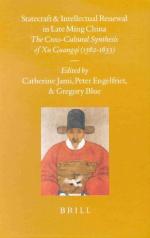
Xu Guangqi (1562-1633) was a Chinese scholar-official, who rose to one of the highest government positions in the Ming dynasty, pioneered in the introduction of Western science and technology into China, and became one of the "Three Pillars of the Catholic Religion in China" in the 17th century.
Xu Guangqi was born in Shanghai in 1562. At the age of 19, he passed the first stage of the Chinese service examination system, receiving the shengyuan (bachelor) degree. He did not, however, pass the second stage juren (master) degree examination until 1597, and even at that late date his success was something of a miracle. When the chief examiner Chiao Hung (1541-1620), concerned that he could not find an outstanding candidate for the "Number One Graduate" position, began to review some of the rejected exam papers, he was surprised to find the excellent essays of Xu Guangqi. Quickly elevated from the "failed...
|
This section contains 2,573 words (approx. 9 pages at 300 words per page) |
|



