
 Print
Print Word
Word PDF
PDF|
This section contains 4,016 words (approx. 14 pages at 300 words per page) |

|
Dictionary of Literary Biography on William Styron
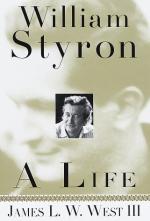
William Styron is a major American novelist who has won wide critical acclaim and stirred controversy by addressing culturally and historically contentious issues. Though not a prolific writer, he has won a national and international readership. His first novel, Lie Down in Darkness (1951), brought him praise for emulating in style and subject matter the Southern Gothic tradition. Subsequent publications reflect his growing preoccupation with postwar American culture (Set This House on Fire, 1960), as well as questions of authority in relation to human rights issues. In fiction and essays, Styron addressed the problems of oppression inherent in any institutional domination, such as the military (The Long March, 1956), the penal system (essays and introductions), slavery in the American South (The Confessions of Nat Turner, 1967), and the Nazi concentration camps (Sophie's Choice, 1979).
In the racially charged atmosphere of the 1960s, The Confessions of Nat Turner, a pseudo-autobiographical novel of an 1831 slave...
|
This section contains 4,016 words (approx. 14 pages at 300 words per page) |
|



