
 Print
Print Word
Word PDF
PDF|
This section contains 2,150 words (approx. 8 pages at 300 words per page) |

|
Encyclopedia of World Biography on William Howard Taft
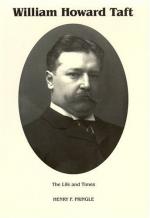
William Howard Taft (1857-1930), as twenty-seventh president of the United States and a chief justice, failed to rise adequately to the challenges of the times, despite his many strong qualities.
William Howard Taft was born in Cincinnati, Ohio, on Sept. 15, 1857, into a family of old New England stock. Both his father and grandfather had served terms as judges, and young Taft aspired to a judicial career. A bright but unimaginative youngster, he attended high school in Cincinnati, and at Yale University he finished second in a graduating class of 121 in 1878. Two years later he graduated from the Cincinnati Law School.
An outsize, congenial young man with a tendency to procrastinate, Taft took an active interest in Republican politics. He was rewarded with appointments to various offices. Between 1880 and 1890 he served successively as assistant prosecuting attorney for Hamilton County, Ohio, collector of internal revenue for Cincinnati, and judge of...
|
This section contains 2,150 words (approx. 8 pages at 300 words per page) |
|



