
 Print
Print Word
Word PDF
PDF|
This section contains 2,250 words (approx. 8 pages at 300 words per page) |

|
Dictionary of Literary Biography on William Ellery Channing
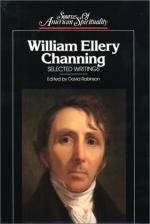
Though he wrote only a few works that dealt expressly with literature, William Ellery Channing influenced American letters profoundly. Widely known as the father of Unitarianism, he articulated the principles, often spiritual in nature, upon which much of the important literature of the early nineteenth century would be founded. The ideas of Ralph Waldo Emerson, Margaret Fuller, Amos Bronson Alcott, and several other lesser-known members of the Transcendental movement all bear the stamp of his thinking; their works embodied his vision of a national literature that spoke to the condition of men and women in America. Even the political ideas of Thoreau, as original as they seem to almost all readers, have roots in Channing's conceptions. Contemporary accounts speak of the melodious quality of Channing's voice when he spoke before an audience, of the charm of his oratorical performances, and Emerson noted that he was "made for the...
|
This section contains 2,250 words (approx. 8 pages at 300 words per page) |
|



