
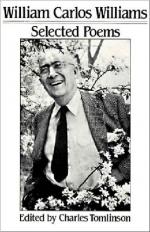
Dictionary of Literary Biography on William Carlos Williams
William Carlos Williams has been considered one of America's foremost modernists, perhaps the quintessential avant-gardist, one who has had a profound influence on subsequent generations of writers. Throughout his life Williams espoused the creation of a unique American art at the same time that he was keenly interested in avant-garde developments from abroad. Paris in particular was a part of his imagination from an early age. His mother had studied painting there as a young woman, only to be called home to the Caribbean when the family money ran out. Marriage and children in alien New Jersey frustrated her ambition to be a portraitist. In 1897 she took her two sons abroad for a year, part of which time they were schooled in Paris. The 1913 Armory Show in New York introduced Williams to the painters of the French avant-garde, and he actually met a number of them when they were in New York during World War I. Thus for someone who called himself "a United Stateser" Williams was inordinately attracted to Europe. This rueful self-portrait appeared in The Great American Novel, published in Paris in 1923, a year prior to the poet's first trip abroad with his wife Flossie. The two had decided to take a "sabbatical" year's leave from his medical practice. Leaving their two young sons with family and friends, the doctor and his wife disengaged themselves from domestic routine by taking an apartment in New York for six months. Then they sailed for Europe aboard the Rochambeau on 9 January 1924.
In keeping with the duality of the poet's sensibility it was fitting that the Williamses divided their sabbatical time between New York and Paris. New York was the American center for modernism. From his outpost in Rutherford, New Jersey, the doctor had been accustomed to quick trips into New York to participate on the edges of artistic activity. But New York in turn was a satellite of Paris, the social fount and source of the avant-garde.
After a nine-day voyage the Williamses arrived at Le Havre and went immediately to Paris for ten days. February was spent in southern France, March in Italy, April in Vienna for medical studies, and May in Paris again. On 12 June 1924 they left for the United States. The Williamses had stayed in Paris for approximately six weeks, a time taken up with wine tasting, choice dining, and sight-seeing. But their greatest pleasure clearly came from meeting a full roster of expatriates congregated in Paris.
In some instances Williams simply renewed old acquaintances, including his close friend Ezra Pound, who returned to Paris from Rapallo. With Pound Williams shared a rivalry over poetry; not so with Robert McAlmon, whom Williams had met in Greenwich Village while McAlmon was working as an artists' model. In 1920 the two had started a mimeographed magazine called Contact, which advocated an American art. Prospects looked fine until McAlmon unexpectedly married British writer and heiress Winifred Ellerman, known as Bryher, and promptly left for Europe. He set up the Contact Publishing Company in Paris, publishing Williams's Spring and All in 1923. This volume of prose and poetry went virtually unnoticed at the time, but it dramatized Williams's concern for the possibilities of poetic creation arising out of a dialectic with the destruction of tradition and convention. Spring and All epitomized Williams's desire for "Contact," the immediacy of fresh experience.
McAlmon served as energetic host to the Williamses in Paris. He introduced them to James Joyce, the young American composer George Antheil, the British novelist Ford Madox Ford, Ernest Hemingway, the sculptor Constantin Brancusi, and Man Ray and his young assistant Berenice Abbott, who photographed the poet and then had a misunderstanding over the fee. Through McAlmon they also met Nancy Cunard, the British heiress, who came to the United States in 1931 during the course of compiling her Negro Anthology (1934) and visited the Williamses in Rutherford, and William Bird, whose Three Mountains Press had published The Great American Novel in 1923 as part of Ezra Pound's "Inquest into the state of contemporary English prose," a series which also included Ernest Hemingway's in our time (1924).
Williams did not meet many of the French Surrealists at this time, even though they were the most highly publicized avant-garde group in Paris. Despite his friend's entreaties McAlmon refused to make the necessary introductions on the erroneous grounds that the Surrealists were inconsequential. (However, Williams did meet Philippe Soupault, whose Surrealist novel Last Nights of Paris he translated in 1929.) A meeting with Gertrude Stein was postponed until Williams's second, and last, brief trip to Europe in 1927.
Despite such omissions and short though it was, the 1924 trip to Paris eventually led to the poet's essays on Joyce, Antheil, Brancusi, and Kay Boyle, a close friend of McAlmon's whom Williams had first met in New York. In 1928 Williams published A Voyage to Pagany, his first novel, based upon the itinerary of his trip in 1924 and drawing upon the theme of an innocent American in Europe. With its straightforward plot and conventional characterization A Voyage to Pagany stood in marked contrast to the earlier The Great American Novel, which celebrated opacity in its pursuit of words in their experiential immediacy. If The Great American Novel is "about" anything, Williams once said, it is about a little Ford falling in love with a truck. It is about an American writer's use of words.
But the most immediate impact of Paris was on In The American Grain (1925), a collection of writings on important figures in American history. Although the poet and his wife researched a number of chapters in New York during the six months prior to their European visit, the trip itself allowed Williams to gain the necessary distance to discern the texture of the American past, as Williams himself recognized, "to hear myself above the boilermakers in and about New York." In the eleventh chapter, at the center of the book, Williams visits the critic Valery Larbaud in Paris and explains the need for an American identity derived from an awareness and understanding of the American past. Separate chapters were published in Broom in 1923 and 1924, and the book itself was brought out in 1925 by Albert and Charles Boni, the poet's first commercial publisher. A handsome volume that had small sales at the time, In The American Grain has since been recognized as a major essay on American culture.
The significance of Paris for Williams's general development as a writer went beyond these tangible achievements. Paris offered Williams an environment in which to see more visual art, always a stimulus for his poetry. He was also able to meet those whom he had known only through their works. They confirmed for him the possibility of a community of artists. But characteristically he drew back from complete immersion in Parisian life. Williams dramatized this ambivalence in "Gulls," a poem written in Paris but set in Rutherford: "My townspeople, beyond in the great world, / are many with whom it were far more / profitable for me to live than here with you." He admonishes them to listen, "for you will not soon have another singer." The city of Paterson and industrial New Jersey were the unlikely materials of his songs.
This is the complete article, containing 1,209 words
(approx. 4 pages at 300 words per page).

