
BookRags.com Literature Guides Literature
Guides
Criticism & Essays Criticism &
Essays
Questions & Answers Questions &
Answers
Lesson Plans Lesson
Plans
My Bibliography Periodic Table U.S. Presidents Shakespeare Sonnet Shake-Up
Research Anything:        
History | Encyclopedias | Films | News | Create a Bibliography | More... Login | Register | Help

Search "Walter Scott, Sir"

Biographies Navigation
 

Walter Scott, Sir Biography

Print-Friendly  Order the PDF version  Order the RTF version
About 3 pages (921 words)
Walter Scott Summary

Bookmark and Share Know this topic well? Help others and get FREE products!
Name: Walter Scott, Sir
Birth Date: August 15, 1771
Death Date: September 21, 1832
Place of Birth: Edinburgh, Scotland
Place of Death: Abbotsford, Scotland
Nationality: Scottish
Gender: Male
Occupations: author

Encyclopedia of World Biography on Walter Scott, Sir

The Scottish novelist and poet Sir Walter Scott (1771-1832) is the acknowledged master of the historical novel. He was one of the most influential authors of modern times.

Walter Scott was born in Edinburgh on August 15, 1771, the son of a lawyer with a long family tradition in law. By birth Scott was connected with both the rising middle class of Britain and the aristocratic Scottish heritage then passing into history. He was educated at Edinburgh University and prepared for a career in law, but his avocations were history and literature. He read widely in English and Continental literatures, particularly medieval and Renaissance chivalric romances, German romantic poetry and fiction, and the narrative folk poems known as ballads.

Translations and Poetry

From these intense interests Scott's earliest publications derived: a translation of J. W. von Goethe's play Götz von Berlichingen (1799) and other translations from German; Minstrelsy of the Scottish Border (1802-1803), a collection of ballads that generated great interest in folk poetry; and a succession of narrative poems, mainly of chivalric or historical action. These poems--including The Lay of the Last Minstrel (1805), Marmion (1808), and The Lady of the Lake (1810)--became best sellers, and Scott established his first literary reputation as a poet of the romantic school.

During these years Scott also pursued a legal career, rising to the official position of clerk of the Court of Session. His enormous energies allowed him to engage in scholarly and journalistic activities. His edition and biography of John Dryden, the English poet and dramatist, published in 1808, remains of value. His politically motivated founding of the Quarterly Review, a literary journal, helped make Edinburgh the most influential center of British intellectual life outside London. In these years Scott also began to create an estate, Abbotsford, to reflect his antiquarian interests. He modeled its furnishings and architecture on the traditions of the medieval era.

Waverley Novels

When sales of his verse narrative Rokeby (1813) declined and a new poet, Lord Byron, appeared on the literary scene, Scott began to develop another of his many capacities. Picking up the fragment of a novel he had begun in 1805, he tried his hand at fiction, and his most fully characteristic novel, Waverley (1814), resulted. As its subtitle, 'Tis Sixty Years Since, established, Waverley was a historical novel about the 1745 rebellion to restore the Stuart line to the British throne. By leading a young and naive Englishman through a wide range of Scottish classes, political factions, and cultural modes, Scott built up a substantial picture of an entire nation's life at a dramatic historical juncture.

The success of Waverley established Scott in the career of a novelist, but it did not establish his name in that role. Unwilling to stake too much on his venture into fiction, he had published Waverley anonymously. Finding that the mask of anonymity had stimulated public interest, Scott signed his subsequent novels "by the Author of Waverley." This signature became his trademark, the novels bearing it being called the "Waverley" novels. The Waverley novels exercised enormous fascination not only for Scots and Englishmen but also throughout the Continent. These novels provided the characters and plots for innumerable stories, plays, and operas, the most famous of which is Gaetano Donizetti's opera Lucia di Lammermoor.

Scott's achievement as a novelist can best be summarized by grouping his novels according to their themes and settings. His first successes were largely in the realm of Scottish history. In the order of their chronological setting, the Scottish novels are Castle Dangerous (1832) and The Fair Maid of Perth (1828), both set in the 14th century; The Monastery and The Abbot (both 1820), its sequel, set during the 16th century's religious upheavals; A Legend of Montrose (1819) and Old Mortality (1816), which deal with the campaigns of the 17th-century civil wars; and a series of novels of the Jacobite (Stuart) rebellions of the 18th century--Rob Roy (1817), Waverley, and Redgauntlet (1824). Other Scottish novels indirectly related to historical themes are The Black Dwarf (1816), The Heart of Midlothian (1818), The Bride of Lammermoor (1819), and The Pirate (1822). Scott also wrote a group of novels set in nearly contemporary times: Guy Mannering (1815), The Antiquary (1816), and St. Ronan's Well (1824).

English Novels

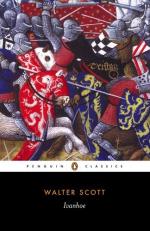
At a critical point of his career, Scott turned to English history for his subject matter. Critics are generally agreed that the English (and Continental) novels, mainly set in medieval times, are inferior in social and psychological realism, but they include Scott's most enduringly popular works. He began with Ivanhoe (1820) and then wrote three other novels set in the period of the Crusades: The Talisman (1825), The Betrothed (1825), and Count Robert of Paris (1832). Quentin Durward (1823) and Anne of Geierstein (1829) deal with the later Middle Ages, and the Renaissance is represented by Kenilworth (1821) and The Fortunes of Nigel (1822). The English phases of the civil-war and Restoration periods were rendered in Woodstock (1826) and Peveril of the Peak (1822), respectively.

So massive a literary corpus cannot be reduced to broad generalizations. Most critics and readers seem to prefer Scott's early novels. On the whole, Scott's work is flawed by sentimentality and rhetoric, but his novels command the power to put modern readers in touch with men of the past.

Scott's later years were clouded by illness, throughout which he continued to write. He spent the energies of his last years trying to write enough to recover honorably from the bankruptcy of a publishing firm in which he had invested heavily. He died at Abbotsford on September 21, 1832.

This is the complete article, containing 921 words (approx. 3 pages at 300 words per page).

View More Summaries on Walter Scott
More Information
  • View Walter Scott, Sir Study Pack
  • Search Results for "Walter Scott, Sir"
  • Add This to Your Bibliography
  • More Products on This Subject
    Walter Scott, Sir
    Walter Scott was the most influential novelist in world literature. Relying on his capacious memory... more

    Scott, Sir Walter, 1st Baronet
    (born Aug. 15, 1771, Edinburgh, Scot.—died Sept. 21, 1832, Abbotsford, Roxburgh) Scottish wri... more


    Ask any question on Walter Scott and get it answered FAST!
    Answer questions in BookRags Q&A and earn points toward
    discounted or even FREE Study Guides and other BookRags products!
    Learn more about BookRags Q&A
    Copyrights
    Walter Scott, Sir from Encyclopedia of World Biography. ©2005-2006 Thomson Gale, a part of the Thomson Corporation. All rights reserved.


    Join BookRagslearn moreJoin BookRags


    About BookRags | Customer Service | Report an Error | Terms of Use | Privacy Policy

