
Forgot your password?  

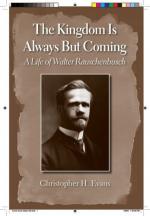
Walter Rauschenbusch | Biography

This Biography consists of approximately 2 pages of information about the life of Walter Rauschenbusch.
This section contains 416 words
(approx. 2 pages at 300 words per page)

Encyclopedia of World Biography on Walter Rauschenbusch

The American clergyman Walter Rauschenbusch (1861-1918) broke the complacency and conservatism of late-19th-century American Protestantism, propounding a Social Gospel capable of responding to the challenges of an industrial, urban era.

Walter Rauschenbusch was born on Oct. 4, 1861, in Rochester, N.Y., the son of a German missionary, and reared in a pietistic environment. Years of study in his youth in Germany provided him with scholarly intellectual equipment and introduced him to the then revolutionary ideas shattering traditional dogmas. On graduation from the Rochester Theological Seminary in 1886, he was ordained to the Baptist ministry.

Rauschenbusch's first pastorate was on the edge of New York City's infamous Hell's Kitchen area, and daily observance of the terrible poverty of his block led him to question both laissez-faire capitalism and the relevance of the old pietistic evangelism with its simple gospel. As he observed during the depression of 1893, "One could hear human virtue cracking and crumbling all around." In these New York years he edited a short-lived labor paper; founded the Brotherhood of the Kingdom, a band of prophetic ministers; and formulated a theology of Christian socialism. In 1897 he left parish work for a professorship at Rochester Seminary, partly because deafness was reducing his ministerial effectiveness.

A series of books now came from Rauschenbusch's pen, most notably Christianity and the Social Crisis, Christianizing the Social Order, A Theology for the Social Gospel, and Prayers of the Social Awakening. These volumes, widely translated, reached hundreds of thousands. Penetrating in his critique of society, solidly grounded in theology, he towered above all the other prophets of the Social Gospel in the Progressive era.

Rauschenbusch believed that men rarely sinned against God alone and that the Church must place under judgment institutional evils as well as individual immorality. He held that men are damned by inhuman social conditions and that the Church must end exploitation, poverty, greed, racial pride, and war. The Church must not betray, as it had done since Constantine, its true mission of redeeming nations as well as men. But he was no utopian. He recognized the demonic in man, understood the power of entrenched interest groups, and predicted no easy or early establishment of God's reign of love. Therefore his theology, unlike that of so many bland modernists of the Progressive era, continues to speak for contemporary tragic conditions. Rauschenbusch died on July 25, 1918, deeply saddened by World War I, by the failure of pacifism to check the holocaust, and by the hatred poured out on all things German.

This section contains 416 words
(approx. 2 pages at 300 words per page)
Copyrights
Walter Rauschenbusch from Encyclopedia of World Biography. ©2005-2006 Thomson Gale, a part of the Thomson Corporation. All rights reserved.
Follow Us on Facebook
Homework Help

